Own Workforce
Material impacts, risks, and opportunities
ESRS 2 SBM-3
Based on the DMA described in the chapter Material Sustainability Matters, it was found that people in Alpiq’s workforce could be negatively affected by certain impacts and risks. Specific risks associated with job requirements (e.g. working environment and shift work) are properly observed and remunerated in workers’ contracts.
Moreover, Alpiq continuously monitors health and safety outcomes, with particular attention to technical workforce, and implements measures to improve both the physical and mental health of its workforce.
Policies related to own workforce
ESRS S1-1
With respect to human rights policy commitments, Alpiq respects and upholds human rights in all aspects of its operations and always complies with the applicable labour laws where people are employed. In general, Alpiq applies international standards such as the conventions of the International Labour Organization.
In order to monitor compliance with human rights commitments, Alpiq operates the “Speak up!” line in compliance with EU DIRECTIVE (EU) 2019/1937 on the protection of persons who report breaches of European Union law. Alpiq wants all employees to feel able to report issues openly and ensures that employees who raise a concern in good faith, and those who cooperate in internal investigations, do not suffer any disadvantage as a result. All Alpiq employees, as well as external stakeholders, have access to the “Speak up!” line and can report identified company-related irregularities and/or misconduct.
Alpiq has a zero-tolerance approach to the violation of human rights. In case of human rights impacts due to misconduct by an employee or manager, Alpiq conducts a thorough, impartial investigation (led by Compliance) to determine the most appropriate consequence, depending on the results of the investigation.
The consequences can range from measures to mitigate and eradicate misconduct to the termination of the contractual relationship with the perpetrator.
In alignment with internationally recognised standards, Alpiq also adheres to the OECD Guidelines for Multinational Enterprises on Responsible Business Conduct, as well as to the International Labour Organization Fundamental Principles and Rights at Work, which include the prohibition of forced and child labour, the prohibition of discrimination in employment and occupation, and the right to freedom of association and collective bargaining.
To foster the prevention of workplace accidents, Alpiq has had a Group Health & Safety Policy in place since January 2021. Outside Switzerland, all employees working in power plants, as well as office-based workers in Italy, Spain, and Hungary, are covered by occupational health and safety (OHS) management systems, certifying the local Alpiq subsidiaries according to ISO 45001.
Alpiq’s Code of Conduct aims to eliminate harassment and discrimination, while promoting equal opportunities as well as inclusion and diversity. The Alpiq Code of Conduct states that employment-related decisions must be based on merit, without regard to a (potential) employee’s race, nationality, ethnic origin, colour, religion, age, gender, gender identity, sexual orientation, marital or family status, disability or other characteristics protected by law.
To advance inclusion and diversity, Alpiq is committed to increasing the female presence in leadership positions, with an ambition of reaching 35% of women in top management by 2030.
The company’s people success (talent review) process aims to increase the visibility of female talent inside the company and focuses on creating development plans for them, in order to support the internal succession pipeline for key roles. Furthermore, Alpiq is a member of Advance and collaborates with other institutions focused on female professional development (e.g. Girls Getting Started in Switzerland, Women In Power, and SVIN: Swiss Association of Female Engineers).
Processes for engaging with own workforce
ESRS S1-2
To enable active engagement with the workforce, Alpiq has a body of workers’ representatives with whom the company conducts continuous dialogue and feedback exchange on its strategy and workforce needs in all applicable countries.
The type and frequency of Alpiq’s engagement with its workforce depends on the country. For instance, in Switzerland the PEKO/COPE attends EB meetings twice a year, while there is a continuous exchange with the Head of Group HR. In other countries, such as Spain, Germany, or France, the Works Council is involved in any important decision affecting the workforce and in the subsequent negotiations with company representatives, led by HR.
Moreover, the company organises several Alpiq Insight sessions per year to inform the workforce about the progress on the company strategy and related measures affecting both the business and its people.
Communication between the workforce and the company takes place mainly through the workforce’s representative bodies. All country-related matters are discussed between the local Works Council and local HR. In Switzerland, where Alpiq’s headquarters is located, the Head of Group HR has operational responsibility for engaging with the PEKO/COPE. Any country-related matter that cannot be clarified between the local Works Council and local HR is escalated to the Head of Group HR.
Alpiq assesses the effectiveness of its engagement with its own workforce through a survey conducted twice a year, which includes questions regarding the communication flow between the company and its employees.
To gain further insights into the perspectives of people in its own workforce, Alpiq established a special task force in 2025. This taskforce is based on a grassroots movement led by employees (both women and their allies) and addresses problems and issues that women face in their professional lives that hinder their development and professional growth. Following an initial analysis phase to identify, propose, and implement necessary measures, the goal for this taskforce is to become an employee resource group (ERG). While the focus in 2025 was on women and cultural diversity, further topics are planned from 2026. In particular, a key focus will be to strengthen the sense of community and encourage knowledge exchange among Alpiq’s younger generation. Alpiq Young, an initiative led by younger employees in Switzerland, serves as a platform for regular meetings where they can share departmental activities, showcase their achievements, and explore the diverse career paths available within Alpiq.
Processes to remediate negative impacts
ESRS S1-3
To provide or contribute to remedy in the case of material negative impacts on people in its workforce, Alpiq operates the “Speak up!” line, in compliance with EU DIRECTIVE (EU) 2019/1937 on the protection of persons who report breaches of European Union law, as previously mentioned. It is Alpiq’s aim that all employees feel able to report issues openly and that employees who raise a concern in good faith, and those who cooperate in internal investigations, do not suffer any disadvantage as a result. The “Speak up!” line enables Alpiq employees, as well as external stakeholders, to report issues such as harassment and discrimination, as well as other potential violations of the Code of Conduct.
In cases of alleged breaches of the Code of Conduct, Compliance will investigate the case. If HR receives a complaint from an employee or detects potential misbehaviour that would not constitute a breach of the Code of Conduct, a process is initiated to clarify the situation with the line manager of the employee who may have misbehaved. If this clarification is not satisfactory, Alpiq’s internal network of coaches will act as mediators. If misbehaviour is confirmed, the employee concerned will be placed on a performance improvement plan or, depending on the severity of the case, dismissed.
Actions related to own workforce
ESRS S1-4
In 2025, Alpiq took significant steps towards managing material risks and opportunities related to its own workforce, namely by conducting employee surveys, leadership training, promoting fair recruitment practices, and expanding flexible working models.
Alpiq provides trainings on workplace conduct, diversity, inclusion, and bystander intervention, while also equipping managers to handle complaints effectively. In addition, fair hiring, promotion, and compensation practices are supported through regular auditing of these processes. Alpiq has clearly defined Talent Acquisition Standards to guide every step of the recruitment process, ensuring transparency and consistency across all business areas. In 2025, training on fair recruiting practices for hiring managers across the Group was developed and was completed by 126 out of 240 members of the leadership team. Additionally, Alpiq advanced its commitment to fair and inclusive recruitment by systematically reducing bias in the hiring process. To support this, Dilemma Cases were introduced in interviews, providing candidates with challenging scenarios to assess critical thinking, ethical reasoning, and value-based decision-making. Finally, Alpiq’s Division Switzerland launched a pilot initiative to explore ways to further embed inclusion in leadership in 2025. The effort included a workshop on inclusion held in September 2025, the expansion of recruitment channels to attract a broader range of profiles, and the development of a new graduate programme within the division. In 2025, seven graduates joined the existing graduate programme in Trading, IT, and Finance. The majority of previous graduates transitioned into permanent roles, reinforcing the programme’s value as a strong talent pipeline for future workforce planning.
In order to mitigate material risks arising from workforce impacts, Alpiq is collaborating with Great Place to Work to evaluate its situation not only from an internal perspective, but also against an external benchmark. In the 2024 survey, enhancing Alpiq’s meeting culture was identified as a priority. In response, new meeting guidelines and meeting facilitation training were introduced in 2025. Furthermore, an internal hackathon was launched to develop additional solutions to improve meeting culture, with the winning idea put into practice. Following a 75% participation rate in the survey conducted in November 2025, Alpiq achieved Great Place To Work certification for 2025 in all its countries, except Spain. The company recorded a decrease in the Net Promoter Score (NPS) from 42 to 30. The survey results highlight strengths in fair treatment regardless of gender, race or sexual orientation, health and safety, and a zero-tolerance policy towards bullying, harassment, and discrimination, while areas for improvement include fair profit-sharing, transparent promotion processes, and meeting culture.
The implementation of Secure Base Leadership (SBL) marks an ongoing cultural transformation journey for Alpiq that began in 2021. The in-house leadership programme is designed to train around 100 members of management each year. By 2025, all employees in management positions at Alpiq have successfully completed the SBL training. In 2023, SBL was recognised by Advance, Switzerland’s leading business network for gender equality, as demonstrating best practice in inclusive leadership development. Beyond the SBL programme, eight members of the leadership team completed the Executive Leadership Coach certification in collaboration with IMD in 2025.
In 2025, Alpiq further expanded modern and flexible working models. Employees can now request an additional week of vacation at any time during the year. Alpiq also extended other-parent leave to six weeks – triple the Swiss legal requirement – supporting a more equal sharing of care responsibilities. Furthermore, Alpiq now grants employees up to 10 days per year to care for dependents with non-severe illnesses.
Alpiq also initiated a comprehensive review in 2025 to assess the requirements and implications of the EU Pay Transparency Directive across its European entities. The objective is to define a consistent framework that ensures compliance with the Directive once it becomes applicable in mid-2026. Based on the outcome of this review, Alpiq will implement the necessary measures in 2026. This will include establishing the processes, data structures, systems, and reporting standards required to meet the Directive’s transparency and disclosure obligations. In addition, the necessary training for HR and management will be provided to support the change.
In addition, Alpiq introduced a comprehensive Global Mobility Framework in 2025 to harmonise the management of extended business trips, international short- and long-term-assignments, and relocations across all countries. The framework sets clear principles and standards, ensuring transparency, fairness, and compliance with applicable legal and tax requirements. Its implementation provides a structured basis for consistent decision-making and strengthens Alpiq’s ability to attract and engage international talent.
Responsibilities for managing material IROs are distributed across HR. In particular, the Centres of Excellence “Talent Experience and Development” and “Organisational Development” allocate resources to the management of Alpiq’s material impacts.
Planned actions to manage material IROs related to Alpiq’s own workforce in 2026 include the following:
- Implementation of a Global HR Information System
- Implementation of measures relating to consequence management and employee mental health
- Development of learning or progression pathways for experts and female talents
- Review of the goal-setting and performance management process
Targets related to own workforce
ESRS S1-5
Alpiq’s organisational targets are set between the end of the third quarter and the beginning of the fourth quarter, in alignment with the budget and the medium-term strategic direction. These targets are presented to and approved by the EB and serve as a basis for creating the Alpiq value chain targets, as well as the individual goals of EB members. Once this process is concluded, the organisational and value chain targets are communicated across the organisation to ensure alignment at division and team levels, by establishing goals that support the overall targets.
The organisational, value chain, and EB targets are continuously monitored, and the NRSC is informed of the progress. As part of this monitoring, potential shortfalls or needs for improvement are identified and addressed in a timely manner, either by adjusting the strategy to environmental circumstances or by implementing the necessary actions.
Characteristics of the undertaking’s employees
ESRS S1-6
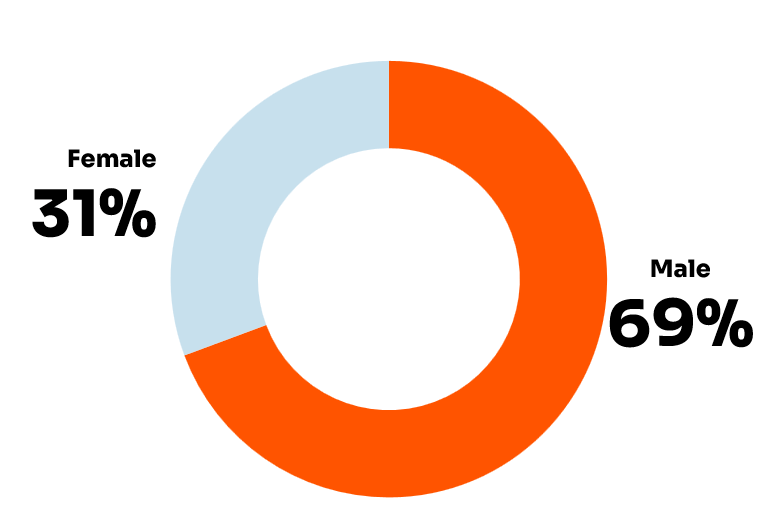
The following chapter discloses figures that provide some insights into the characteristics of Alpiq employees. These figures do not include employees of P2X Solutions, Entegra Wasserkraft AG and Isento Wasserkraft AG, which are fully-consolidated entities, but whose employees do not have an Alpiq contract and are therefore not counted as own employees. The total headcount of 1432 employees corresponds to 1374.8 Full-Time Equivalents (FTEs). The FTE figure reported in the Financial Statement differs because it includes employees that do not have an Alpiq contract but work in the fully consolidated entities mentioned above. The following table and chart show Alpiq’s employee headcount by gender and year:
Number of employees (headcount) | |||
Gender | 2025 | 2024 | 2023 |
Male | 995 | 959 | 910 |
Female | 437 | 426 | 372 |
Total employees | 1,432 | 1,385 | 1,282 |
The following table shows the employee headcount in countries where the undertaking has at least 10% of its total number of employees in 2025:
Country | Number of employees (headcount) |
Switzerland | 800 |
Czech Republic | 161 |
The following table shows information on employees by contract type, broken down by gender for the year 2025:
Contract Type | Female | Male | Total |
Permanent employees | 417 | 977 | 1,394 |
Temporary employees | 16 | 16 | 32 |
Non-guaranteed hours employees | 4 | 2 | 6 |
Total | 437 | 995 | 1,432 |
Finally, the last table in this chapter shows the total number of employees who left the company during the reporting period and the rate of employee turnover (= employees who left divided by the total number of employees at 31 December 2025):
Country | Number of employees who left | Turnover rate |
Switzerland | 91 | 11% |
Spain | 16 | 18% |
France | 15 | 12% |
Czech Republic | 26 | 16% |
Italy | 8 | 7% |
Hungary | 5 | 6% |
Germany | 6 | 22% |
Norway | 1 | 33% |
Finland | 3 | 23% |
Sweden | 0 | 0% |
Bosnia | 0 | 0% |
Total | 171 | 12% |
Collective bargaining coverage and social dialogue
ESRS S1-8
Participation rate Great Place to Work survey
75%
The global share of Alpiq employees covered by workers’ representatives is 51%. This share includes countries that have at least 50 employees and represent at least 10% of the company’s total employees. Alpiq has local Work Councils but no European Work Councils (EWCs) or European Company Work Councils (SE-WCs) as the overall number of employees based in EU countries is less than 1,000.
Share of Alpiq employees covered by workers’ representatives
51%
Diversity metrics
ESRS S1-9
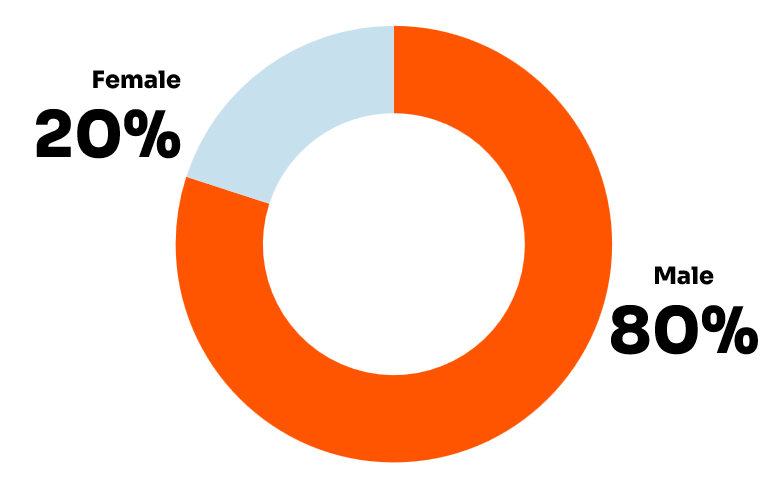
Alpiq has set the ambition to reach a share of 35% women in top management by 2030. In 2025, Alpiq had 20% women in top management, compared to 25% in 2023 and 21% in 2024. The reason for the decline of this share in 2024 is that Alpiq changed the base population used to calculate the female representation in top management:
- 2023 report: EB and EB-1 (32 employees)
- 2024 report: EB and Job Grade 10 (75 employees)
- 2025 report: EB and Job Grade 10 (84 employees)
The new and larger pool of employees used as the base for the calculation reflects those employees holding strategic positions and decision-making roles that influence the direction of Alpiq much better. Alpiq thereby takes a full commitment to enable the development of female leaders from an early stage. Whilst the current percentage of 20% women in top management is not yet at the level Alpiq aims for, measures and strategies are being developed internally to increase this share.
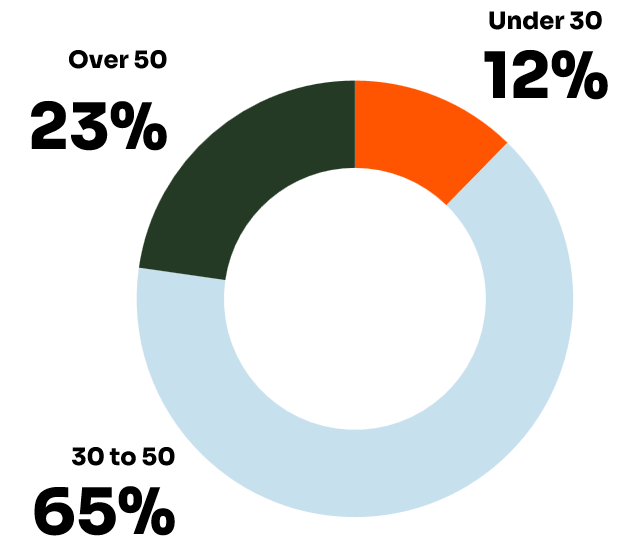
The following table shows the distribution of Alpiq employees by age group:
Age group | Number of employees (headcount) | Share (%) |
Under 30 years | 170 | 11.9% |
30 to 50 years | 935 | 65.3% |
Over 50 years | 327 | 22.8% |
Total | 1,432 | 100% |
Social protection
ESRS S1-11
As part of its social protection measures, Alpiq protects its employees in case of injury. In Switzerland, accident insurance is compulsory and regulated by the Federal Law on Accident Insurance (UVG). Accident insurance protects Swiss employees from the financial consequences of occupational accidents, non-occupational accidents, and occupational diseases. Article 66 of the UVC states that for certain companies, especially those with higher risk potential (including industrial companies), employees must be insured with SUVA. Alpiq provides SUVA accident insurance for all Swiss employees, as well as an additional accident insurance with AXA that gives employees access to private insurance benefits in case of hospitalisation due to an accident.
In other countries, employees are covered by social protection against loss of income due to injury and acquired disability according to local regulations.
Another important aspect of social security is the protection against loss of income due to parental leave. Alpiq aims to meet or exceed, when possible, local norms for maternity leave and parental leave for the other parent. Across Alpiq’s European operations, practice varies in line with local requirements and norms.
In Switzerland, after the birth of a child, the mother is entitled to paid maternity leave of 14 weeks and the other parent is entitled to two weeks (14 days) by law. At Alpiq, the paid parental leave for the other parent has been increased to six weeks (30 days) in Switzerland. Mothers on maternity leave are not allowed to work unless they voluntarily decide to return to work after the first eight weeks. Parental leave for the other parent can be taken within six months of the birth of the child.
- Alpiq pays 100% of the maternity allowance, while 80% of the allowance is reimbursed to Alpiq by “Ausgleichskasse Schweizerischer Elektrizitätswerke” (AKEW). The additional 20% is covered by Alpiq itself.
- Alpiq pays 100% of the allowance for the parental leave of the other parent, while 27% of the allowance is reimbursed to Alpiq by “Ausgleichskasse Schweizerischer Elektrizitätswerke” (AKEW). The additional 73% is covered by Alpiq itself.
In Spain, mothers and fathers are both protected for 16 weeks after the birth of a child. During these 16 weeks, the government covers 100% of the social security contribution base. If the salary of the employee is higher than this base, Alpiq Spain covers the rest in order to ensure a combined salary coverage of 100%. Mothers and fathers can request additional unpaid leave until the child reaches the age of one year, with a guarantee that their positions in the company are retained. An extension beyond the child’s first birthday is also possible, but in this case Alpiq does not guarantee that the employee’s position will be retained.
In France, the standard maternity leave is 16 weeks and is paid. The social security system covers the mother’s salary during maternity leave up to a certain limit, and Alpiq France covers the difference between this limit and the mother’s actual salary. Standard paternity leave in France is 25 days. This is also covered by social security up to a defined limit, while Alpiq France covers the difference between this limit and the employee’s salary. If the mother gives birth to more than one child, maternity and paternity leave are extended.
Paid other parent leave in Switzerland
in days
30
Training and skills development metrics
ESRS S1-13
In 2025, the career development reviews focused on the development plans for Alpiq’s talents. The percentage of Alpiq employees who participated in career development reviews in 2025 is 8.6%, with 75% of participants being male and 25% being female employees. The total average number of recorded training hours per employee was 20.92 hours, with a gender split of 69.2% male and 30.8% female recorded training participants.
Health and safety metrics
ESRS S1-14
Twenty-four percent of Alpiq employees are covered by a health and safety management system (either ISO 45001 or EKAS). As for Alpiq employees with an asset risk profile, i.e. employees who work in power plants and therefore have a higher risk exposure than office-based staff, 97% are covered by a health and safety management system (ISO 45001 or EKAS in Switzerland). There have been zero fatalities, and zero work-related ill-health recorded for Alpiq employees in 2025. However, there has been one reported work-related accident among Alpiq employees in 2025, namely one office staircase fall. The Total Recordable Injury Frequency Rate (TRIFR) of Alpiq employees is 0.4 based on 1,000,000 hours worked. The number of recordable work-related injuries of workers who are not employees but whose work and/or workplace is controlled by Alpiq amounts in 2025 to one - a contractor sprained an ankle while descending a wind‑turbine ladder.