Material Sustainability Matters
Material Sustainability Matters
Overall material impacts, risks and opportunities
ESRS 2 SBM-3
In 2024, Alpiq conducted a CSRD-aligned DMA for the first time, resulting in four material topics. For 2025, a review of this assessment resulted in the following ten material topics:
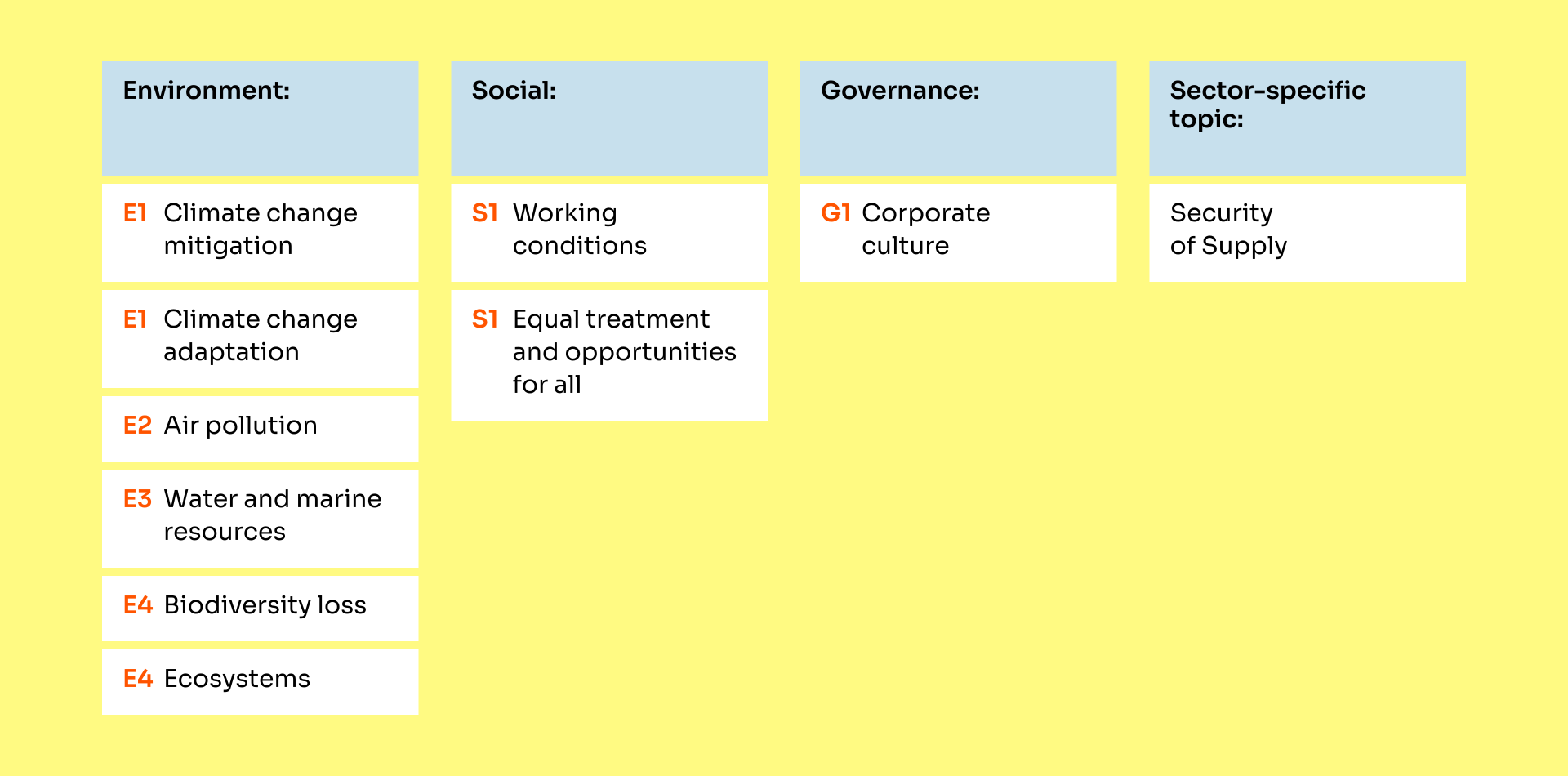
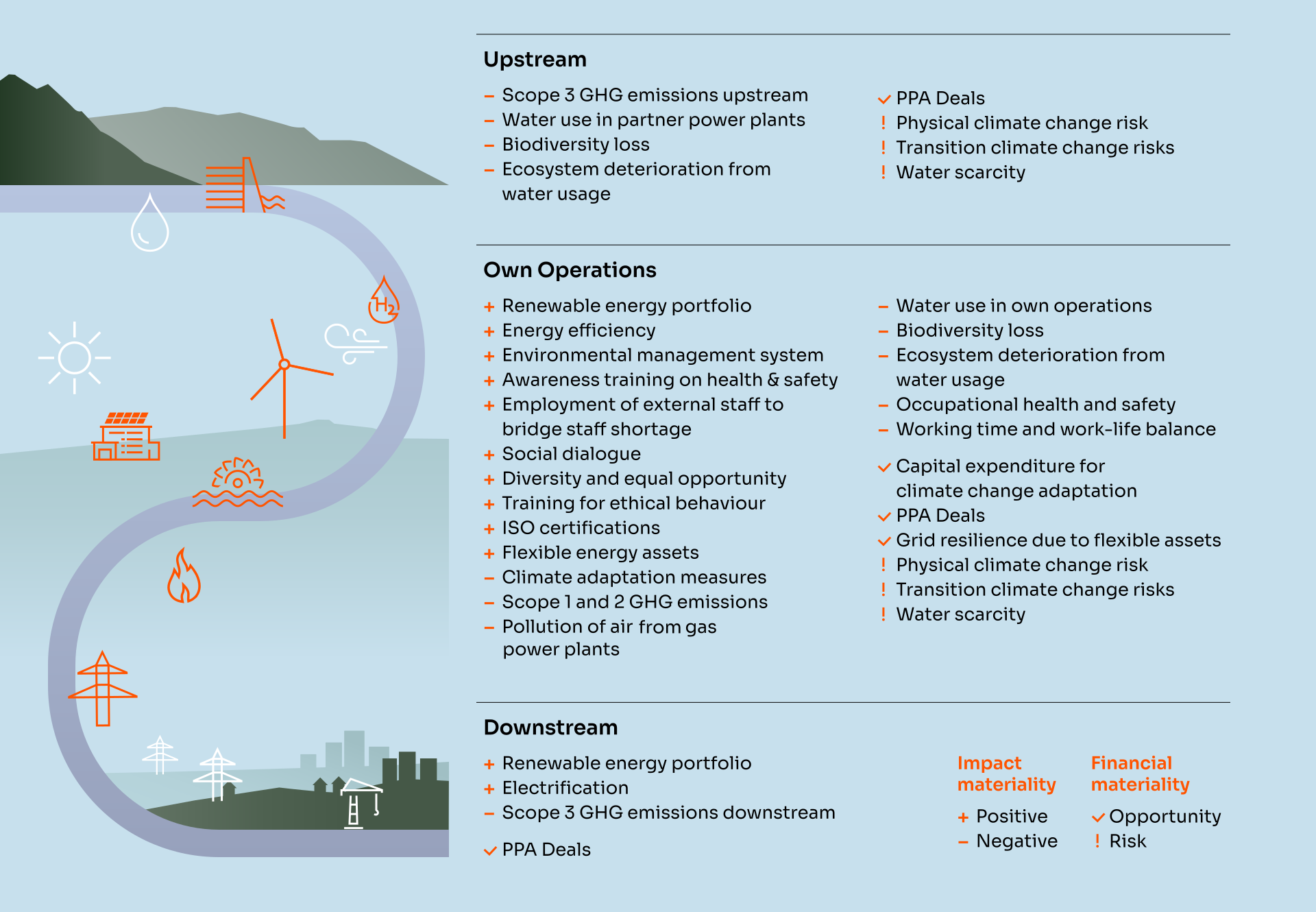
In conducting the DMA, Alpiq identified sustainability topics of high relevance to the company, taking into account both the impact of Alpiq’s business on the environment and people (inside-out/impact perspective), as well as the risks and opportunities (outside-in/financial perspective) facing Alpiq due to external effects such as climate change.
The following tables and graph illustrate the findings of the DMA. There are two tables describing material impacts (positive and negative), one table describing material opportunities, and one table describing material risks.
Material positive impacts
Material Impact | ESRS Topic (Level 1) | Description | Time Horizon | Value Chain Location | Stakeholder Affected (Category) |
Renewable energy portfolio | E1 Climate Change | Providing renewable electricity (from hydropower, wind and photovoltaics) to customers helps reducing customers’ Scope 2 emissions. | S, M, L | Downstream | Nature |
Renewable energy portfolio | E1 Climate Change | Contributing to the green energy transition by supporting the development of local renewable energy and flexible power plants in line with the Confederation’s 2050 and EU Energy Targets and through participation in round tables organised by the federation. | S, M, L | Own operations | Nature |
Energy efficiency | E1 Climate Change | Reducing environmental impact through energy-efficiency measures and investments that reduce energy use in own buildings and assets. | S, M, L | Own operations | Nature |
Environmental management system | E1 Climate Change | Systematic control and reduction of environmental impacts, e.g. through hydro sanitation, impact studies for new projects, certification by the Eco-Management and Audit Scheme (EMAS), installation of on-site electric car charging stations, or efficiency increases in assets. | S, M, L | Own operations | Nature |
Electrification | E4 Biodiversity and Ecosystems | Energy use contributes to electrification and reduces the negative impact on biodiversity and nature in diverse sectors, such as the transport industry. | S, M, L | Downstream | Nature |
Awareness training | S1 Own Workforce | Positive impact on employees by spreading awareness, training employees, and maintaining processes for managing near misses, unsafe conditions and unsafe behaviour. | S, M, L | Own operations | Own workforce |
Employment of external temporary staff | S1 Own Workforce | Bridging short-term staff shortages with external temporary staff and employees working on consultancy mandates to ensure employee’s work-life balance. | S, M | Own operations | Own workforce |
Social dialogue | S1 Own Workforce | Social dialogue impacts employees’ well-being, work-life balance and mental health. Impact on own workforce as well as potential spill-over effect on peers. | S, M, L | Own operations | Own workforce |
Diverse perspectives by embracing diversity and equal opportunity | S1 Own Workforce | Alpiq can have a positive impact through embracing diversity and equal opportunity in its own workforce (via workplace programmes such as Kita support). | S, M, L | Own operations | Own workforce |
Training for ethical behaviour | G1 Business Conduct | Training and e-learning, e.g. on Code of Conduct, GDPR, competition law, market integrity, and cybersecurity, to promote ethical practices and good governance. | S, M, L | Own operations | Own workforce |
ISO certification | G1 Business Conduct | ISO certification ensures compliance with quality, environmental and health and safety standards. | M, L | Own operations | Other |
Flexible energy assets | Security of Supply | Contribution to energy transition thanks to flexible thermal assets, BESS and pumped hydro power plants that guarantee stability during times of intermittent electricity generation. | S, M, L | Own operations | Nature |
1S = Short Term, M = Medium Term, L = Long Term
Material negative impacts
Material Impact | ESRS Topic (Level 1) | Description | Time Horizon | Value Chain Location | Stakeholder Affected (Category) |
Climate adaptation measures | E1 Climate Change | Adaptation measures to protect assets from climate-related hazards (e.g. landslides, floodings, heat and cold stress etc.). | S, M, L | Own operations | Nature |
Scope 1 and 2 GHG emissions | E1 Climate Change | Scope 1 and 2 GHG emissions (e.g. CO2, NOx, SF6 etc.), mainly from the operation of own power plants, i.e. gas-fired power plants. | S, M, L | Own operations | Nature |
Scope 3 GHG emissions upstream | E1 Climate Change | Scope 3 GHG emissions in the upstream supply chain mainly caused by drilling, extraction of gas and biogas, production of capital goods for renewable energies, energy production for energy trading, upstream transportation and production of energy storage (batteries). | S, M, L | Upstream | Nature |
Scope 3 GHG emissions downstream | E1 Climate Change | Scope 3 GHG emissions in the downstream supply chain mainly caused by consumption of fossil fuel energy traded by Alpiq, transmission and distribution losses, and end-of-life treatment of energy storages and power plants. | S, M, L | Downstream | Nature |
Pollution of air due to gas power plants | E2 Pollution | Carbon oxide (CO) and nitrogen oxide (NOx) emissions, primarily dependent on the production of electricity and steam, which fluctuates with changing market conditions or customer requirements. | S, M, L | Own operations | Nature |
Water use in partner power plants | E3 Water and Marine Ressources | Significant water withdrawal, consumption and discharge which affects water availability and state of habitats, with potential negative impact on local communities. | S, M, L | Upstream | Affected communities |
Water use in own operations | E3 Water and Marine Ressources | Significant water withdrawal, consumption and discharge which affects water availability and state of habitats, with potential negative impact on local communities. | S, M, L | Own operations | Affected communities |
Direct impact drivers of biodiversity loss | E4 Biodiversity and Ecosystems | Construction in proximity of areas occupied by natural environments worthy of protection. | S, M, L | Upstream, Own operations | Nature |
Ecosystem deterioration due to sediment management | E4 Biodiversity and Ecosystems | Sediment management strategies such as sediment flushing or bypass can alter downstream habitats by changing the sediment composition and flow regime. This can disrupt aquatic ecosystems and negatively impact fish populations and other species dependent on stable sediment dynamics. | S, M, L | Upstream, Own operations | Nature |
Ecosystem deterioration due to artificial structures and water usage | E4 Biodiversity and Ecosystems | Hydropower has a negative impact on ecosystems due to the construction and operation of artifical structures, as well as water rerouting and usage, all of which disrupts ecosystems. | S, M | Upstream, Own operations | Nature |
Occupational health and safety of employees and of third-party personnel | S1 Own Workforce | Occupational safety and health incidents can negatively impact workers by creating physical harm, psychological distress and lower sense of security in the workplace. | S, M, L | Own operations | Own workforce |
Working time and work-life balance | S1 Own Workforce | Workers can be negatively impacted by a lack of mechanisms supporting work-life balance (e.g. overtime in office jobs or shift work at night). | S, M, L | Own operations | Own workforce |
1S = Short Term, M = Medium Term, L = Long Term
Material opportunities
Material Opportunity | ESRS Topic (Level 1) | Description | Time Horizon | Value Chain Location |
Green capital expenditure for climate change adaptation | E1 Climate Change | Opportunity to make operations more resilient through green capital expenditure made in environmentally sustainable economic activities (storage, grid resilience, diversification of energy sources, etc.) | S, M, L | Own operations |
PPA Deals | E1 Climate Change | Opportunity of closing PPA deals with industrial clients to decarbonize their businesses and guarantee power supply. | S, M, L | Upstream, Own Operation, Downstream |
Grid resilience due to flexible assets | Security of supply | Opportunity to strengthen operations and revenues via ability to quickly adjust generation assets’ output in response to changes in grid frequency by means of flexible assets and strategies (advanced control systems, energy storage systems, demand response programmes, distributed generation and virtual power plants). | S, M, L | Own operations |
1S = Short Term, M = Medium Term, L = Long Term
Material risks
Material Risk | ESRS Topic (Level 1) | Description | Time Horizon | Value Chain Location |
Physical climate change risk | E1 Climate Change | Less efficient cooling systems for gas power plants if water temperature rises above standard and extreme hydro intakes due to variations in precipitation, lower total precipitation in the long term, glacier retreat, and more sediment. Risks of downtime, higher insurance costs, reputational damage, increased operational expenses for damage mitigation and compliance measures, e.g. due to flooding, strong winds, heavy rainfall, and high temperatures. | S, M, L | Upstream, Own operations |
Transition climate change risks | E1 Climate Change | Market, policy & legal, reputation and technology risks, entailing for example decommissioning of existing fossil fuel infrastructure, increased operational expenses due to policy changes (e.g. higher CO2 or gas prices, taxes, compliance costs), reputational damage in case of non-compliance with new regulations. | S, M, L | Upstream, Own operations |
Water scarcity | E3 Water and Marine Resources | Risk of water scarcity in areas in which the company operates and failures in water supply that impair facilities, assets and/or operations. | S, M, L | Upstream, Own operations |
1S = Short Term, M = Medium Term, L = Long Term
Identification process for material impacts, risks, and opportunities
ESRS 2 IRO-1
In 2024, a comprehensive DMA process was followed:
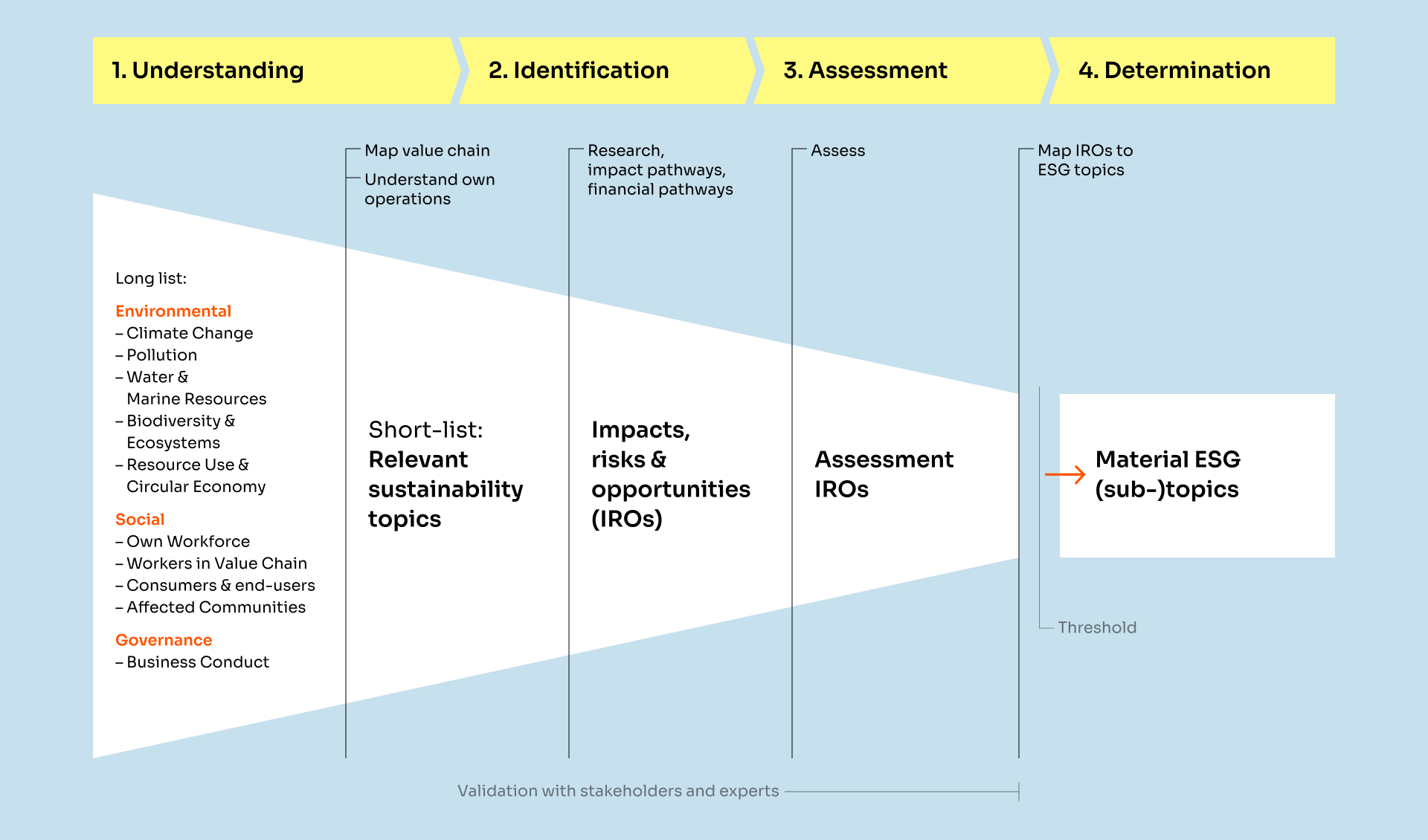
1. Understanding phase
- Value chain mapping: Alpiq’s value chain (own operations plus upstream and downstream activities) was mapped to internal value chain elements (Asset, Trading, and Origination) and business segments (Asset Renewable Energies, Asset Non-Renewable Energies, Energy Trading, Origination and Cross-Activities).
- Site and asset assessment: Identification of subsidiaries, sites, and assets relevant to specific material topics.
- Stakeholder identification: Stakeholders were identified and classified to support selection for DMA participation and ongoing engagement.
- Long list of sustainability matters: Matters were compiled based on ESRS, SASB, external sources, and peer benchmarking.
- Short-list creation: The list was narrowed to relevant topics, with a clear rationale provided for exclusions.
2. Identification phase
- IRO definition: Short-listed topics were broken down into sub-topics to define IROs. These were identified by the DMA project team using internal analyses and external research, reviewed by experts, and finalised through workshops.
3. Assessment phase
- Assessment criteria: Criteria and scoring for IROs were defined, and supported by Alpiq’s ERM for the financial dimension.
- IRO assessment: Internal experts assessed each IRO; the DMA team validated the assessments and resolved any discrepancies.
4. Determination phase
- External stakeholder engagement: Surveys and interviews with key stakeholder groups (e.g. banks, customers, NGOs, and business partners) informed the assessment of selected topics.
- BoD and EB assessment: Both bodies provided financial and impact assessments to support the identification of material topics.
- Materiality threshold: A score of 4.2 (out of 5) was set to determine material sub-topics. The final materiality outcome was approved by the EB and the NRSC.
- Documentation: The full DMA process was documented.
To remain current, the Sustainability Committee reviewed the DMA, identified IROs for 2025 and collected feedback from Alpiq’s country managers. Based on this review, six new sub-topics were identified and added, namely the following:
- E1 Climate change adaptation
- E2 Air pollution
- E4 Ecosystems
- S1 Equal treatment and opportunities for all
- G1 Corporate culture
- Security of Supply (sector-specific)
This review was documented and approved by the EB. In order to ensure that Alpiq stays up to date with regard to material IROs, the Sustainability Committee will continue to review the DMA and the resulting IROs once a year and determine whether changes are required. If material IROs change, the DMA review requires approval by the EB.
Disclosure requirements in ESRS covered by the undertaking’s sustainability statement
ESRS 2 IRO-2
Material topics and sub-topics identified through the DMA were displayed in a double materiality matrix in accordance with their ratings for financial materiality and impact materiality. A materiality threshold was then defined, above which a topic or sub-topic is considered material and therefore reported on in the Alpiq Sustainability Report. In determining the appropriate threshold, benchmarking, peer practices, the company’s strategic direction, and previous DMA outcomes were taken into consideration.
Following the identification of material topics and sub-topics, a scoping exercise was conducted to determine materiality at a requirements level (for material topics and sub-topics). Some requirements were deemed out of scope due to lack of materiality, even where the corresponding topic or sub-topic was considered to be in scope. The outcome of this scoping exercise served as the basis for the disclosure requirements included in this Sustainability Report. However, material requirements for which data is currently unavailable were omitted from this year’s report and will be included in the Sustainability Report once CSRD-compliance becomes mandatory for Alpiq.
A list of the disclosure requirements complied with in the Sustainability Report 2025 can be found in the ESRS Index in the Appendix.
After covering the general disclosures, the Sustainability Report follows by disclosing information relating to environmental, social and governance matters, as well as sector-specific information.